
Applied AI Bites #7
AI Robots, One-person billion company, MCP and GenAI Zurich 2025

Hey there, this is Ruggiero!
Just a reminder, since I have been silent for a few weeks :)
Today I’d like to touch a few different topics. From a big push for AI robots to societal changes in how businesses are being built thanks to AI!
Thank you for being part of the Applied AI community. I am always looking for feedback so please let me know if you have any by replying to this email!
Agenda today:
AI and Robots
The one-person Billion company
Just in case, a few words about MCP
GenAI Zurich Discount Code
AI and Robots
Have you seen this little guy? It’s Real, it’s not Star Wars.
At this year's GPU Technology Conference (GTC), NVIDIA CEO Jensen Huang captured imaginations by unveiling "Blue," an irresistibly cute, droid-like robot inspired by iconic Disney and Star Wars designs. Blue, created in collaboration with Google DeepMind and Disney Research, isn't just charming.
Newton Physics Engine
Blue showcased the groundbreaking capabilities of NVIDIA’s newly introduced physics engine, Newton, developed to simulate robotic movements with unprecedented realism. Its ability to realistically simulate rigid and soft-body dynamics, tactile feedback, fine motor skills, and precise actuator controls could revolutionize industries where interactive robotics play a crucial role.
Blue is powered by two NVIDIA GPUs and leverages Google DeepMind's advanced AI frameworks, serving as a dynamic demonstration of what Newton makes possible.
NVIDIA is committed to making this technology accessible, with an early open-source release of the Newton SDK expected later this year. Blue is powered by two NVIDIA GPUs and leverages Google DeepMind's advanced AI frameworks, serving as a dynamic demonstration of what Newton makes possible.
Beyond Blue and Newton, NVIDIA introduced a suite of powerful tools to propel physical AI forward:
NVIDIA Isaac GR00T N1: The world's first fully customizable foundational model for humanoid robotics, aimed at making advanced humanoid robots a reality.
NVIDIA Cosmos World Foundation Models: Open and versatile models designed specifically for developing sophisticated physical AI systems.
The Predicted Economic Impact
NVIDIA envisions robotics as a future $10 trillion industry, highlighting robotics’ potential to alleviate a projected global worker shortage of 50 million by 2030. Even more astonishing is the $50 trillion opportunity represented by advancements in physical AI technology.
The one-person Billion company
There is an interesting narrative suggesting that AI will make such an outcome possible thanks to automation. Interestingly, the industry most likely to be impacted by this extreme level of automation is software development itself. While difficult to measure, many experts believe that within the next few months or years, AI could write up to 90% of software code.
”One-person” here should be seen as a metaphor. The idea is that with AI you can have much smaller teams and achieve big results.
But it is very likely that a 10-people or 20-people team could reach that goal. And that would be unheard of.
AI companies are among the fastest-growing ones that ever existed. Look at the users and revenue growth of OpenAI, Cursor, Windsurf, Bolt.new, and Lovable for example. It's mind-blowing.

The technology is probably already capable of automating specific departments like customer support. High-growth startups and established companies like Intercom now allow you to connect to the necessary knowledge bases to respond automatically to customer questions about your product.
Besides specific departments, the software industry is the most subjected to this automation: imagine a world where a customer flags a bug, an AI creates a ticket in Jira, and then another AI picks it up, checks the code, and fixes the problem. Once resolved, the coding AI informs the customer support AI, which then notifies the customer that the ticket is resolved. This scenario seems entirely plausible.
Another self-driving car case?
Self-driving cars should have been all around us by now but they are not. They've felt close for at least 8 years, for example Elon Musk repeatedly predicted self-driving cars would be everywhere. He was wrong.
Reliability and edge-case management turned out to be very tough problems.
But LLMs are different.
We see major improvements weekly, they cost way less than cars, and they're much more accessible. LLMs have attracted an unprecedented number of smart people to work on them and with them. Anyone in the world can create an API key and start experimenting. Progress always needs two things: technical breakthroughs and people working on them. For many technologies, the second factor is limited. For LLMs, it's different. Progress happens in 1/10 of the time it took before.
Additionally, AI automation follows a "J-curve": early efforts feel clunky. Supervising imperfect AI often takes more time than doing tasks manually.
Yet persistence pays off.
Suddenly we see exponential "overnight success" of a technology (or company or person). Curiously, this happens when fewer people are watching.
Self-driving cars are almost ready now. If you've been to San Francisco, you'll see Waymo everywhere picking people up. At night, it feels like almost every second car is self-driving.
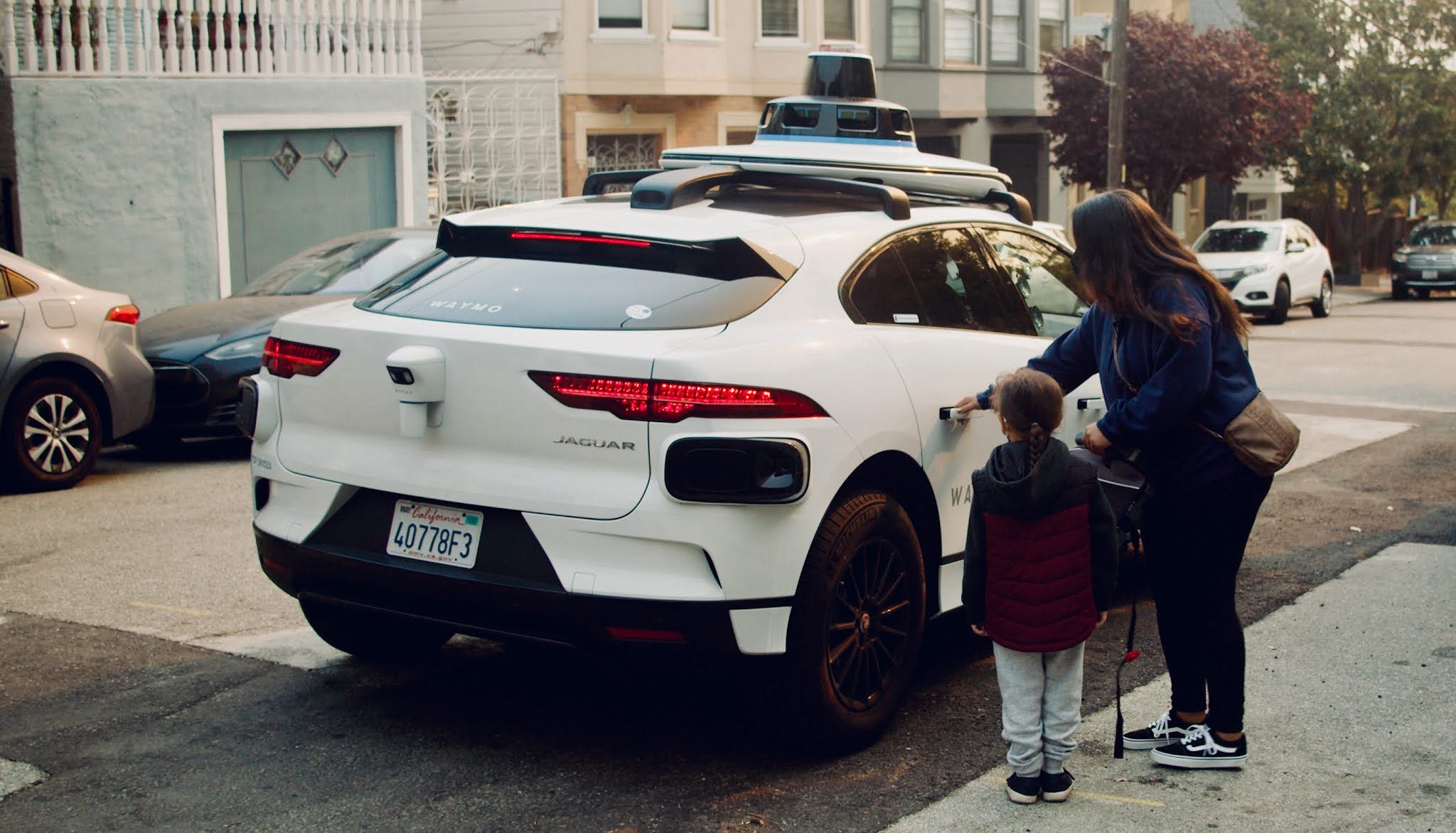
AI is ready. And you can build a big business without a huge headcount.
If you are a committed builder ready to go ALL-IN on this generational shift or an elite marketer who knows how to make things go viral, I’d love to connect with you. I have got a few things cooking right now.
The question you might be asking while reading this.
If everything can be automated, what will happen to people's jobs?
While the fear of mass job losses exists, I believe the immediate shift is subtler. Companies will try to stay lean.
Hiring slows down.
We haven't seen big mass firings related to AI yet. Other factors like a possible recession matter much more right now.
What we'll see though is a slowdown in hiring. Companies will increasingly try to use an "AI agent" to automate at least part of the work before adding headcount. The consequences of this are uncertain.
The good news is that humanity has gone through many such changes before. We always adapted successfully. If I had to bet, at least looking at the long term, history will repeat itself.
Do you who a knocker-up was? link

Model Context Protocol (MCP)
Semi-technical section. A few notes on MCPs just in case you saw people throwing the term around but you are still confused.
Anthropic's Model Context Protocol (MCP) is an open-source standard designed to facilitate seamless AI model integration with external tools and data. Think of it as a standardized way to grant large language models (LLMs) access to tools. A useful analogy is that MCP functions like an API but with AI agents as the foundational principle.
It has triggered vigorous debate. Reactions span from enthusiastic “it’s a game-changer“ to skeptical critiques.
MCP was actually introduced in November 2024, it kind of was forgotten but then got very popular after the AI Engineer Summit in New York (19-22 February).
Positive Perspectives
Many users are enthusiastic about MCP's potential, viewing it as a significant advancement in connecting AI models with external tools and data. Developers are already implementing MCP servers, with supporters describing it as a future standard for agent frameworks. You can find a directory of MCPs here, here or here. Several users believe MCP successfully delivers what other platforms have promised but failed to achieve.
Critical Viewpoints
A significant portion of criticism focuses on MCP's complexity, particularly its reliance on stateful servers. Critics describe the user experience as clunky and question whether MCP offers meaningful innovation compared to simpler existing technologies like OpenAPI (if you are a fast reader, please note it is NOT OpenAI). Some users dismiss MCP as unnecessarily complicated and conceptually flawed.
There is work currently being done to make stateless MCP possible: here
What we know for sure
MCPs are often compared to USB ports. You have your computer (MCP client in the analogy) to which you can connect any device (MCP server).
The need MCPs are trying to tackle is crystal clear. Different tools will want to optimize how LLMs connect to them. APIs kind of do that job but thinking first principle with LLMs in mind, you can have way better results. The question is only, will MCPs be the right solution long term?
GenAI Zurich 2025 - 100 CHF discount
If you are a European reader you can’t miss the conference we are organizing: www.genaizurich.com
We’ve got talks from amazing startups to big enterprises like Novartis, UBS, NVIDIA, AWS, Wise, Google, Hugging Face, SIX, Bosch, Lufthansa and much much more. Check out the full speakers list here. It’s the perfect place to learn and connect.
When choosing the ticket you can Access Key: RUGG-10-25 for a 25% (100 CHF) discount.

Hope you enjoyed this issue!
I’ll talk to you soon,
Ruggiero